The Fabric of the Divine: Garad: The Sacred White of Bengal
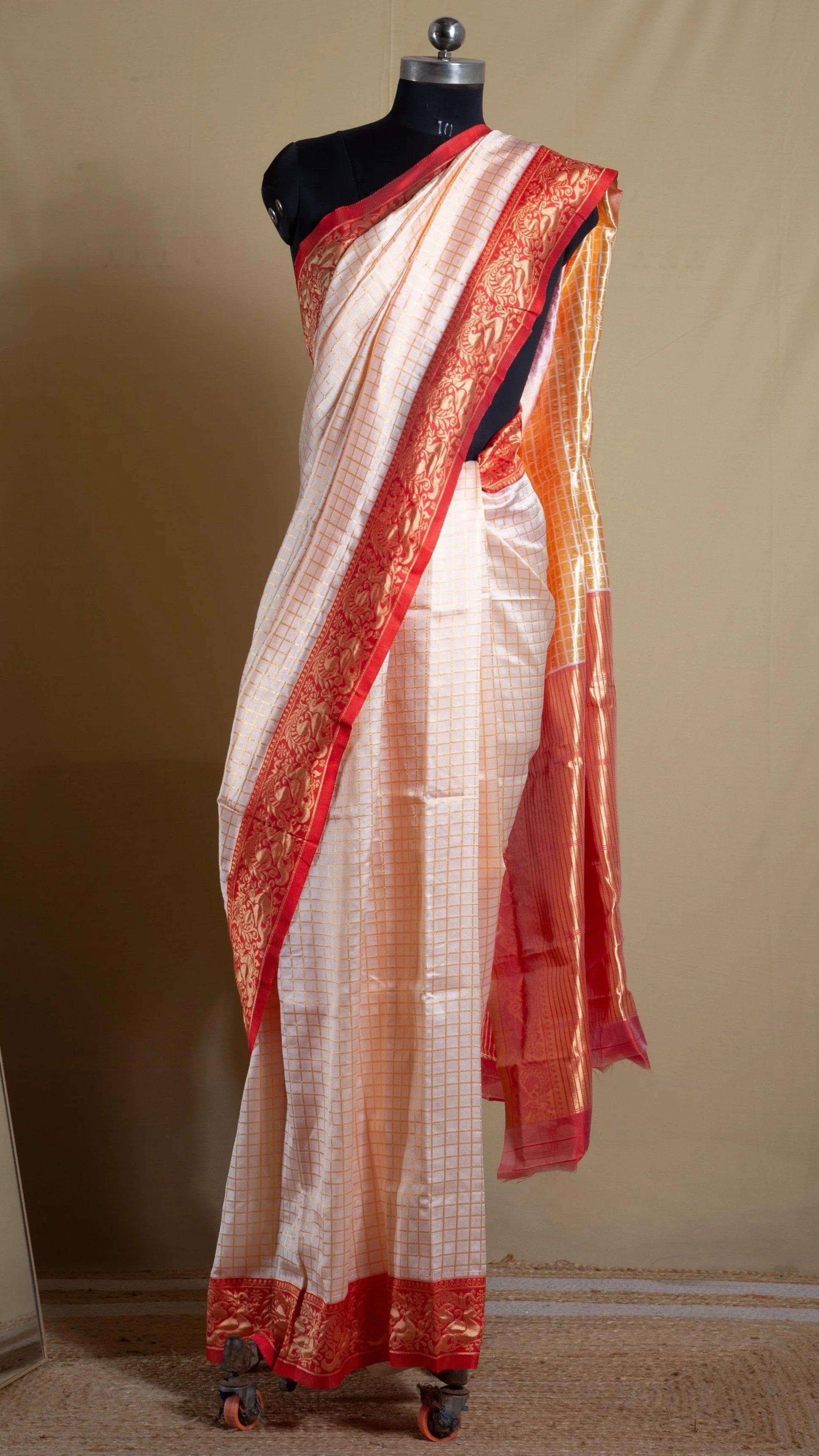
Part of the ArNe Heritage Series—exploring India’s endangered textiles one week at a time.
We have traveled from the Toda huts of the Nilgiris to the royal workshops of Aurangabad. We have seen 15 distinct traditions, all fighting for survival.
It feels fitting to end our journey in Bengal with Garad.
The Definition of Purity If you have seen a Durga Puja celebration, you know this saree. The name comes from Gorad, meaning "undisturbed" or pure. Unlike other silks that are processed with chemicals, Garad is woven in its natural state.
It is undyed, unbleached, and simple. Just a crisp, white silk field with a bold red border.
My Personal Reflection In a world of over-dyed, over-processed fast fashion, Garad stands out for its silence. It doesn't scream for attention. It whispers.
It teaches us that the most powerful statement is often the simplest one.
The Final Plea Garad is facing a flood of synthetic "Art Silk" copies that look the same but feel like plastic. When we choose the fake over the real, we aren't just buying a saree; we are eroding a tradition of purity that goes back centuries.
A Note on Our Journey Thank you for walking the path of the Endangered Thread with me over these last few months. We have learned that "Sustainability" isn't a new concept—it is woven into our history.
The journey doesn't end here. It continues every time you ask: "Who made this?"
Transparency Note
At ArNe Boutique, we believe in using modern tools to preserve ancient stories. This post was written with heart, researched by humans, and enhanced by AI to help us tell these stories more effectively. All facts, sentiments, and edits are 100% ours.