The Geometric Pride (Toda Embroidery): The Stitch That Looks Like a Weave
Part of the ArNe Heritage Series—exploring India’s endangered textiles one week at a time.
We have spent the last month exploring the silks of royalty. Now, we are leaving the palaces and climbing into the Nilgiri Hills.
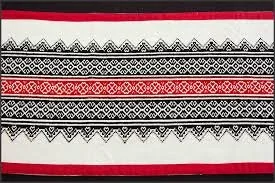
As someone who loves structure and geometry, Toda Embroidery speaks to me in a way florals never could. At first glance, I honestly thought it was a weave. The lines are so straight, the patterns so dense, that it looks like it came off a loom.
But it didn't. It was stitched by hand.
The Illusion of the Needle I learned that the Toda women practice a technique called Pukhoor. Unlike most embroidery where you draw a pattern and fill it in, the Toda women count the threads of the base fabric.
Using red and black wool on coarse white cotton, they stitch from the reverse side. They are essentially doing reverse-engineering with a needle—creating a pattern on the front by working blindly from the back.
My Personal Reflection The striking red and black stripes aren't just for style. I learned they represent the sociology of the tribe: nature, the buffalo (sacred to the Todas), and the cycle of life.
In a world where "Boho-Chic" is often mass-produced in factories, seeing this fierce, authentic tribal identity felt like a wake-up call. This isn't a trend; it's a language. And with the younger generation moving to cities for work, the number of women who speak this language is shrinking.
Why We Must Save It To lose Toda embroidery is to lose the visual identity of the Nilgiris. It reminds me that "luxury" isn't always about gold thread. Sometimes, luxury is the sheer human skill required to make a stitch look like a weave.
What’s Next? The Toda women stitch geometry into their shawls. But in the deserts of Gujarat, the Bharwad shepherds weave it directly into their skirts using tiny beads of cloth.
Next Week: Endangered Thread #06—The Dotted Dance of Tangaliya.
At ArNe Boutique, we believe in using modern tools to preserve ancient stories. This post was written with heart, researched by humans, and enhanced by AI to help us tell these stories more effectively. All facts, sentiments, and edits are 100% ours.