The Temple Border: The Saree Knot that Binds Karnataka
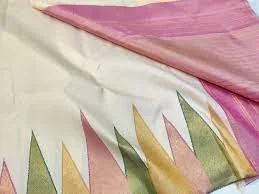
Part of the ArNe Heritage Series—exploring India’s endangered textiles one week at a time.
You can spot an Ilkal saree from a mile away. It has these distinctive red and white loops on the pallu that look like temple spires (called Tope Teni).
But as I learned this week, the real magic of Ilkal isn't just the pattern—it's the engineering.
The "Kondi" Technique Ilkal weavers use a technique called Kondi to physically join the body of the saree (usually cotton) with the pallu (usually silk). They don't sew it; they interlock the loops of the warp threads during the weaving process.
It creates a garment that breathes like cotton but drapes like royalty.
My Personal Reflection I love Ilkal because it is the "Working Woman's Saree." It wasn't just for queens; it was for women who moved, worked, and lived. It is durable, dignified, and culturally distinct.
As a woman in business, I resonate with that mix of practicality and elegance.
The Reality Check Like so many other crafts, the younger generation in the Bagalkot district is migrating to cities for better wages. The looms that create that signature Kondi lock are falling silent.
What’s Next? Ilkal is the saree of the earth. But our next textile was woven for the queens of Nellore, and it is so light it was historically called "woven air."
At ArNe Boutique, we believe in using modern tools to preserve ancient stories. This post was written with heart, researched by humans, and enhanced by AI to help us tell these stories more effectively. All facts, sentiments, and edits are 100% ours.