Painting with a Needle: Chamba Rumal
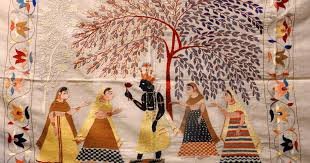
Part of the ArNe Heritage Series—exploring India’s endangered textiles one week at a time.
We are traveling to the valleys of Himachal Pradesh today.
As someone who appreciates perfectionism, Chamba Rumal ("Chamba Handkerchief") absolutely stunned me. In almost every form of embroidery I know, you hide the "messy" back side.
But in Chamba Rumal, there is no messy side.
The "Do-Rukha" Miracle I learned that this technique is called Do-Rukha (Two-Sided). The artisans use a double satin stitch so precisely that the image looks exactly the same on the front and the back.
It isn't just a craft; it's a mirror image created by hand.
The Backstory Historically, these weren't just handkerchiefs; they were ceremonial coverings for gifts, patronized by the Rajas of Chamba. The needlework is influenced by Pahari miniature paintings—detailed scenes of the Ramayana and Krishna’s life.
My Personal Reflection In a world of "fast fashion" where seams are often crooked and hems fall apart, the sheer discipline required for Chamba Rumal is humbling. It reminds me that quality used to be the default standard, not a luxury add-on.
Why We Must Save It This art was nearly extinct. While some revival efforts are happening, the number of masters who can execute the perfect "Do-Rukha" technique—without a single knot showing—is critically low.
👉 [Contact Us].
What’s Next? The Chamba Rumal was for kings. But our next textile was for the home—a geometric blanket from Punjab that offered a warmth we have almost forgotten.
Next Week: Endangered Thread #11—Khes: The Lost Comfort.
Transparency Note
At ArNe Boutique, we believe in using modern tools to preserve ancient stories. This post was written with heart, researched by humans, and enhanced by AI to help us tell these stories more effectively. All facts, sentiments, and edits are 100% ours.