The Mathematical Marvel (Patan Patola): The Saree That Takes Six Months to Weave
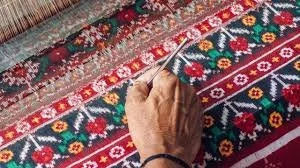
Part of the ArNe Heritage Series—exploring India’s endangered textiles one week at a time.
Given my family's heritage is from Gujarat, Patan Patola is a name I grew up hearing. It is legendary in our culture—the ultimate symbol of auspiciousness and prestige.
But I’ll be honest: while I knew the name, I didn't truly understand the struggle.
I spend my days studying supply chain efficiency and product management. So, when I finally dug into the technical process behind this textile, my jaw dropped. I assumed it was difficult; I didn't know it was a mathematical miracle.
The Reality Check
I learned that a single Patan Patola saree takes six months to a year to weave.
Imagine that. In a world where we get frustrated if a webpage takes three seconds to load, these artisans spend months just preparing the threads.
The Science of Art
Patan Patola is a "Double Ikat" weave. The weaver has to dye the warp (vertical) and weft (horizontal) threads before they are placed on the loom. They have to calculate—mathematically—exactly where the color on the vertical thread will meet the color on the horizontal thread.
If they are off by a millimeter, the pattern breaks.
My Personal Reflection
Knowing that this craft is right in my backyard (culturally speaking) makes me feel a deeper responsibility to it. I realized I had taken the "legend" for granted without respecting the "labor."
Status: Exclusive & Endangered
The secret of this craft is currently guarded by just a few families in Patan. It is a finite resource. Every time I see one now, I don't just see a Gujarati heirloom. I see a masterpiece of patience that I am still learning to fully appreciate.
👉 Shop the Look: Patan Patola is a serious investment. If you love that geometric precision but aren't ready for the investment yet, contact us to inquire.
What’s Next?
Patola is famous for its complexity. But the next textile we are exploring shocked me with its design thinking. It’s a 19th-century solution to a very human problem.
Next Week: Endangered Thread #03—Silk on the Outside, Cotton on the Inside (The Mashru Innovation).